Buzkashi: Central Asia’s Ferocious Horseback Game
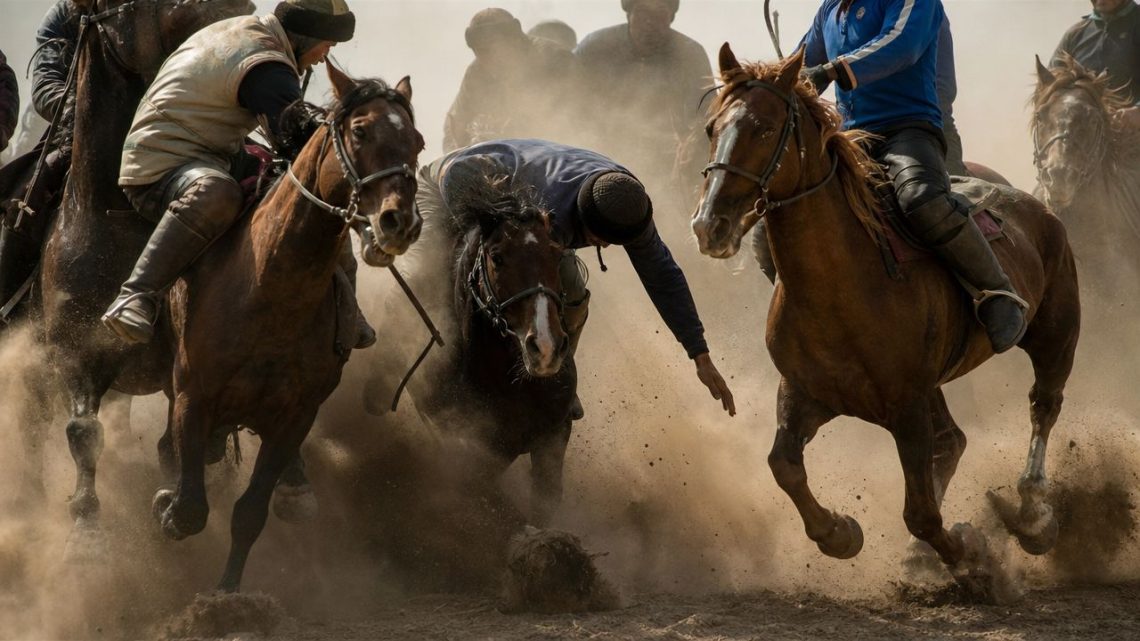
August 5, 2026There are rough sports, and then there is buzkashi. Across the steppes and valleys of Central Asia, dozens of horsemen gather on an open field with a single goal, to seize the carcass of a headless goat or calf and carry it clear of a churning mass of rivals to a scoring circle. The name translates roughly as goat grabbing, which is accurate but does the chaos no justice. To watch buzkashi is to watch a stampede with a purpose.
Long the national sport of Afghanistan and beloved across neighbouring regions, the game has roots that stretch back centuries into the nomadic horse cultures of the area. The horses are not props. They are bred and trained for years specifically for the game, taught to push into crowds, stand firm under pressure and respond to the subtlest shift of their rider’s weight while the rider’s hands are busy wrestling a heavy carcass off the ground. A good buzkashi horse is worth a small fortune and carries enormous prestige for its owner.
How the Game Is Played
The rules vary considerably from place to place, which is part of buzkashi’s character. In its freewheeling traditional form, there may be no fixed teams at all, simply a scrum of riders each fighting for individual glory. The more organised modern version, sometimes contested between sponsored clubs, imposes teams, boundaries and a designated scoring area. The basic objective endures across every variant.
- A rider must lean from the saddle, haul the carcass up from the ground, and clamp it against his leg or under his body.
- He then has to break free of the surrounding riders, who are entitled to grab, shove and whip to wrest it away.
- Carrying it around a marker and dropping it into the scoring circle earns the point and, often, a cash prize put up by the match’s wealthy patron.
None of this is gentle. Collisions are constant, falls are frequent, and the sheer weight of the carcass combined with the press of horseflesh makes injury a routine hazard for both riders and mounts. The men who excel, known as chapandaz, are revered figures who often compete well into middle age, their reputations built on years of bruises.
More Than a Game
Buzkashi is never merely sport. Matches mark weddings, holidays and seasonal festivals, drawing whole communities to the sidelines and serving as a stage where status, generosity and horsemanship are publicly measured. The patron who funds the prizes earns honour, the winning rider earns fame, and the spectators earn a story to retell through the long winter. For all its ferocity, the game carries a deep social grammar that outsiders rarely grasp on first viewing.
It remains one of the most visceral spectacles in the sporting world, a contest where horse and human strength fuse into something close to controlled mayhem. Those drawn to sports where danger sits at the very centre of the appeal will find buzkashi shares a certain kinship with other punishing traditions, including the snow-bound spectacle of skijoring, horse racing on skis.