Sepak Takraw: Volleyball Played With the Feet
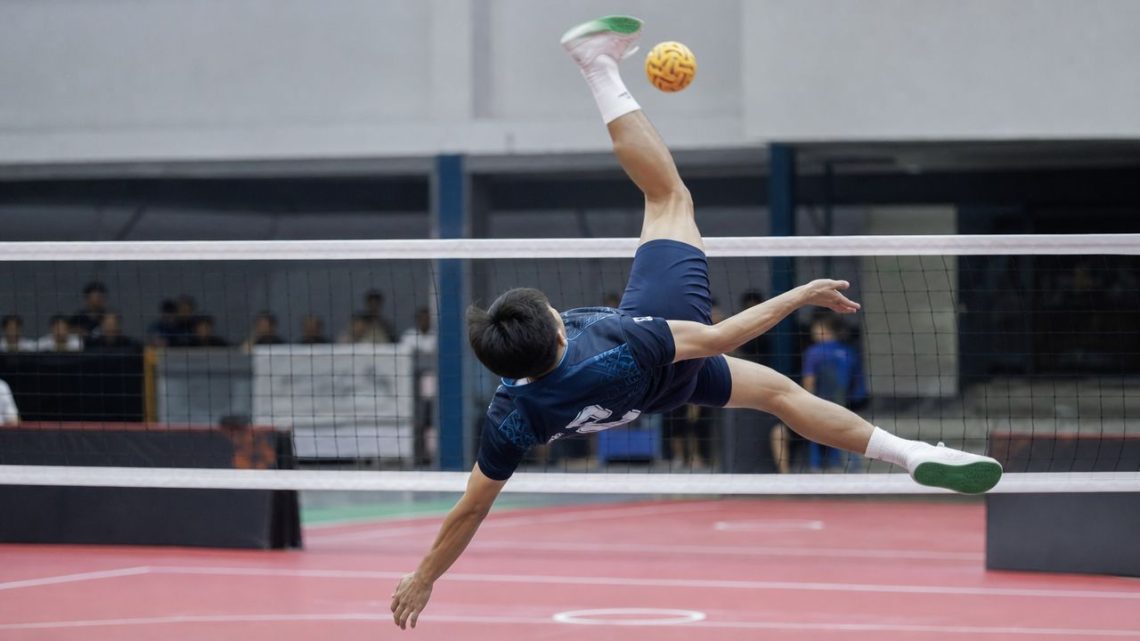
July 30, 2026To the uninitiated, sepak takraw looks like a magic trick that someone decided to turn into a competitive sport. A woven rattan ball arcs over a net at startling speed, and a player twists his entire body upside down to meet it with the sole of his foot, sending it screaming back across the court. Hands are forbidden. Volleyball played with the feet barely captures it, because the feet are only the beginning. Knees, thighs, chest and head are all fair game, and the best players cycle through all of them in a single dizzying rally.
The sport is woven deep into the fabric of Southeast Asia. Variations have been kicked around for centuries across Thailand, Malaysia, Indonesia, the Philippines and beyond, originally as a circle game in which villagers simply tried to keep the ball aloft for the sheer joy of it. There was no net, no winner, just the communal challenge of refusing to let the ball touch the ground. The competitive version with a net and two opposing sides is a more modern invention, and the name itself reflects the region’s shared ownership of the game, borrowing the Malay word for kick and a Thai word for the woven ball.
The Anatomy of a Rally
A standard match places small teams on either side of a net strung at roughly head height, on a court about the size of a badminton court. A serve sets the ball in motion, and from there the rally unfolds with each side allowed a limited number of touches before returning it. What separates sepak takraw from its hand-based cousins is the spectacle of the spike. To attack a ball travelling above the net using only the feet, a player launches into the air, inverts, and whips a leg over his own head in a movement that resembles a bicycle kick lifted straight from football and then exaggerated tenfold.
The athleticism on display is genuinely extraordinary. Players need the flexibility of gymnasts, the timing of jugglers and the nerve of people who do not mind being briefly upside down a metre off the ground. A misjudged spike can send a player crashing onto his back. The rattan ball, though light, is firm, and meeting it cleanly with the instep takes thousands of hours of practice.
A Sport on the Rise
Sepak takraw is a fixture at major regional multi-sport events, where it draws fiercely partisan crowds, and it has slowly gathered devotees far beyond its homeland. Clubs have sprung up in Europe and North America, often founded by curious athletes who saw a clip online and could not quite believe it was real. Modern synthetic balls have largely replaced the traditional rattan in elite play, making the game faster and more consistent, though purists still admire the handwoven originals.
The appeal is obvious once the disbelief fades. Few sports pack so much raw acrobatics into so small a space, and fewer still ask their athletes to defy gravity quite so casually. It belongs comfortably in the company of the planet’s odder pastimes, the kind explored in this magazine’s wider celebration of the sports that refuse to behave normally, gathered together in its tribute to the love of strange sports.