Chess Boxing: Alternating Rounds of Brains and Brawn
August 27, 2026Few sports demand that an athlete throw a left hook in one breath and defend against a queen’s gambit in the next. Chess boxing does exactly that. It is a hybrid discipline in which two competitors alternate between rounds of speed chess and rounds of boxing, swinging from the cerebral to the physical and back again until someone either runs out of moves or runs out of standing. The premise sounds like a barroom joke, yet the sport has grown into a genuine competitive circuit with sanctioning bodies, weight classes and a devoted following.
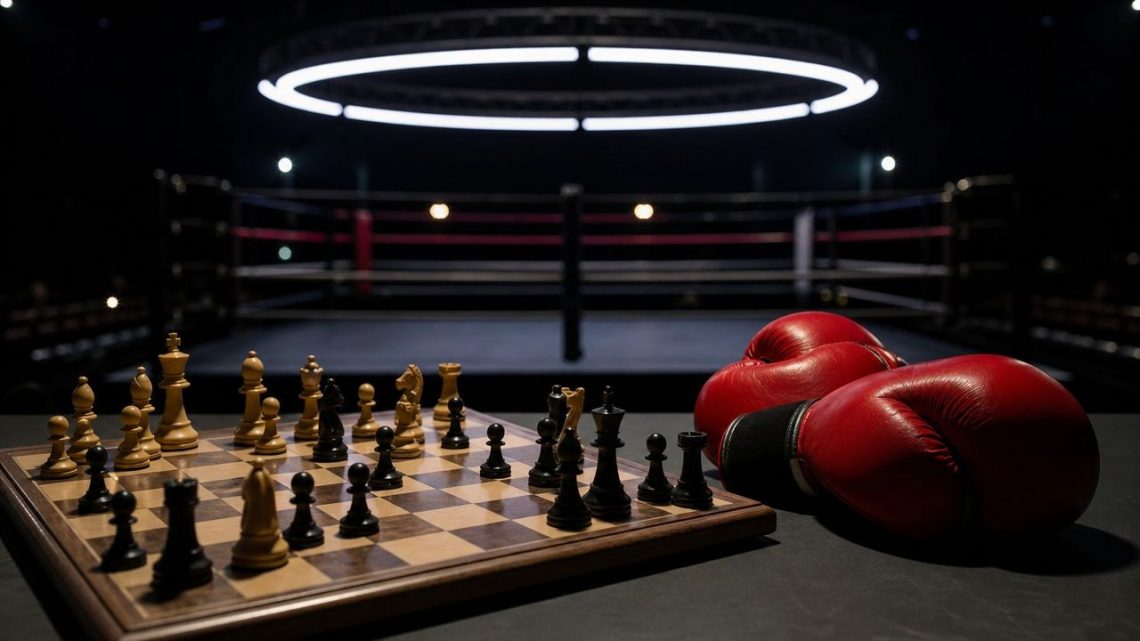
The format is the heart of the spectacle. A bout typically opens at the chessboard, where the fighters play a round of fast chess before the table is whisked away and the gloves come on. The rounds continue to alternate, chess then boxing, with brief pauses between them. A competitor can win in either arena: checkmate at the board or a knockout in the ring both end the contest. There are also subtler routes to victory, such as a chess opponent exceeding the allotted thinking time, or a referee stopping the fight. The strange beauty is that a boxer dominating the physical exchanges can still lose if his mind wobbles when he sits back down, breathing hard, and stares at a board he can barely focus on.
From Art Project to Arena
Chess boxing did not begin as a sport at all. It started as a piece of performance art, inspired in part by a graphic novel that imagined the two activities fused into a single duel. A Dutch artist took that idea off the page and staged it as a live event, half provocation, half athletic experiment. What might have remained a one-off curiosity instead caught on. Organizers in Germany and beyond built rules around it, and clubs began training fighters who could genuinely do both things well rather than merely survive one of them.
That dual demand is what separates a serious chess boxer from a novelty act. The conditioning required is unusual. A fighter must keep a heart rate spiking from exertion while also keeping a clear enough head to calculate several moves deep. Adrenaline, the boxer’s friend, is the chess player’s enemy. Many bouts are decided not by the best puncher or the best tactician but by whoever manages the swing between the two states with the steadiest nerves.
The Appeal of the Absurd
Part of what keeps audiences coming back is the sheer incongruity of the image: a battered athlete hunched over an elegant board, sweat dripping near the pieces. It rewards a rare blend of attributes and punishes anyone who has trained only half of the equation. The sport sits comfortably alongside other oddities that treat physical endurance and unlikely skills as worthy of formal competition.
For all its theatrical roots, chess boxing has settled into something durable, with international titles and a steady stream of newcomers willing to test both their jab and their judgment. It remains one of the more inventive entries in the long tradition of unusual contests explored in this look at the wider world of strange sports, a reminder that human competitiveness will attach itself to almost any combination of talents.