Dangerous Skateboarding: When a Road Crack Ends the Trick
October 22, 2013Ask most people what causes a bad skateboarding fall and they will picture something dramatic, a failed jump down a flight of stairs or a misjudged rail. The truth is far more ordinary and, in its way, far more sinister. Some of skateboarding’s nastiest spills come from things you can barely see: a hairline crack in the pavement, a stray pebble, the narrow gap where two slabs of concrete meet. These tiny imperfections punch well above their weight, and understanding why is the first step toward avoiding them.
The Physics of a Small Wheel and a Small Gap
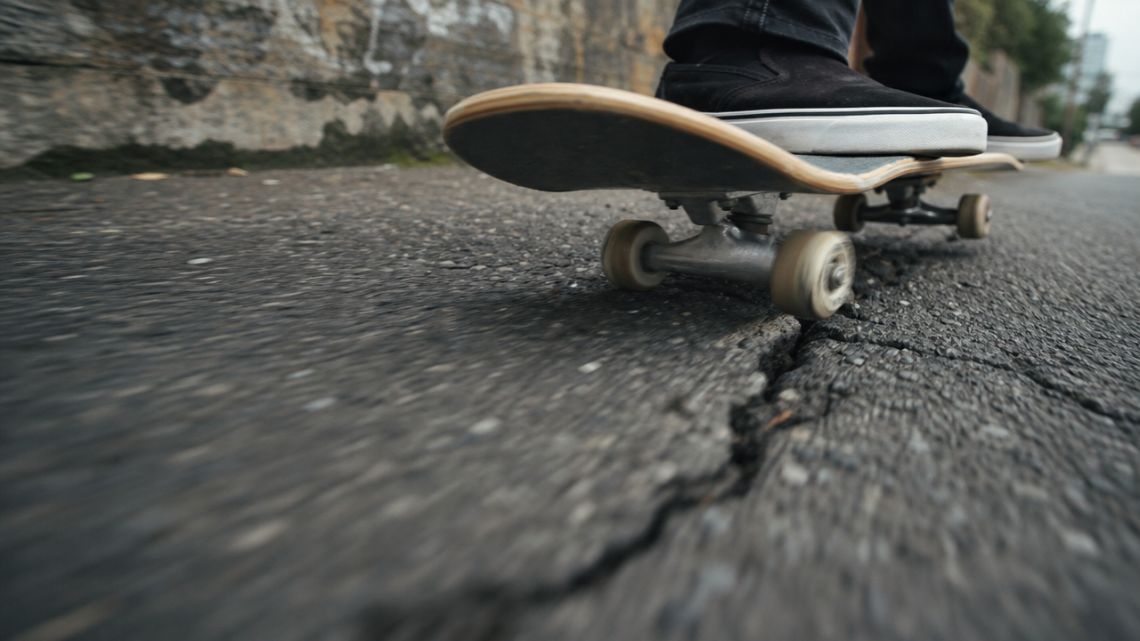
Skateboard wheels are small and hard, and that combination is the heart of the problem. A small wheel has a small radius, which means it cannot simply roll over an obstacle the way a large bicycle tire might. When the leading edge of a hard wheel meets a crack or a raised joint, it does not climb the gap; it jams into it. The wheel stops almost instantly while the board, and the rider standing on it, keep moving forward.
That sudden halt is what sends people flying. Momentum that was happily traveling along at walking or jogging pace gets dumped, in a fraction of a second, into a forward pitch. The rider is thrown ahead of the board with little time to react and often no chance to get their feet back under them. A pebble can do the same thing by lodging under a wheel and locking it. The object is laughably small; the consequence is not.
Why Slow Doesn’t Mean Safe
One of the cruelest things about these falls is that they happen at speeds riders assume are harmless. There is a comforting instinct that going slowly keeps you safe, but a wheel that stops dead will throw you whether you were cruising or barely moving. At low speed the rider is often relaxed, not braced, and not expecting trouble, which can make the resulting tumble worse rather than better. The body has no warning to tense up or roll out of it.
Expansion joints in sidewalks and roadways are a particular hazard because they are everywhere and easy to ignore. They run in straight, predictable lines, and a wheel that crosses them at a shallow angle can drop in and catch. The same goes for the lip between a path and a driveway, or a patch of road that has cracked and lifted over the years.
None of this means flat-ground skating is reckless. It means a little attention goes a long way. Sensible habits make the difference:
- Scan the surface ahead rather than staring at your feet, so cracks and debris register early
- Cross joints and seams as close to head-on as possible instead of at a shallow angle
- Wear a helmet and pads, since the falls that catch you off guard are exactly the ones you cannot brace for
The strange lesson of all this is that the road itself is often the most dangerous opponent a skater faces. No rail, no ramp, no ambitious trick, just a gap a few millimeters wide waiting patiently for a hard little wheel. Respect the pavement, keep your eyes up, and the smallest hazards lose most of their bite.