Mont Ventoux: Cycling’s Brutal Giant of Provence
December 14, 2006Some climbs in cycling are hard. Mont Ventoux is something else. Rising alone out of the Provence countryside in southern France, the mountain has earned a grim nickname among riders: the Giant of Provence. It is not the highest climb the sport visits, but it may be the most feared, and the reason has as much to do with the strangeness of the place as with its gradient.
A Mountain That Looks Wrong
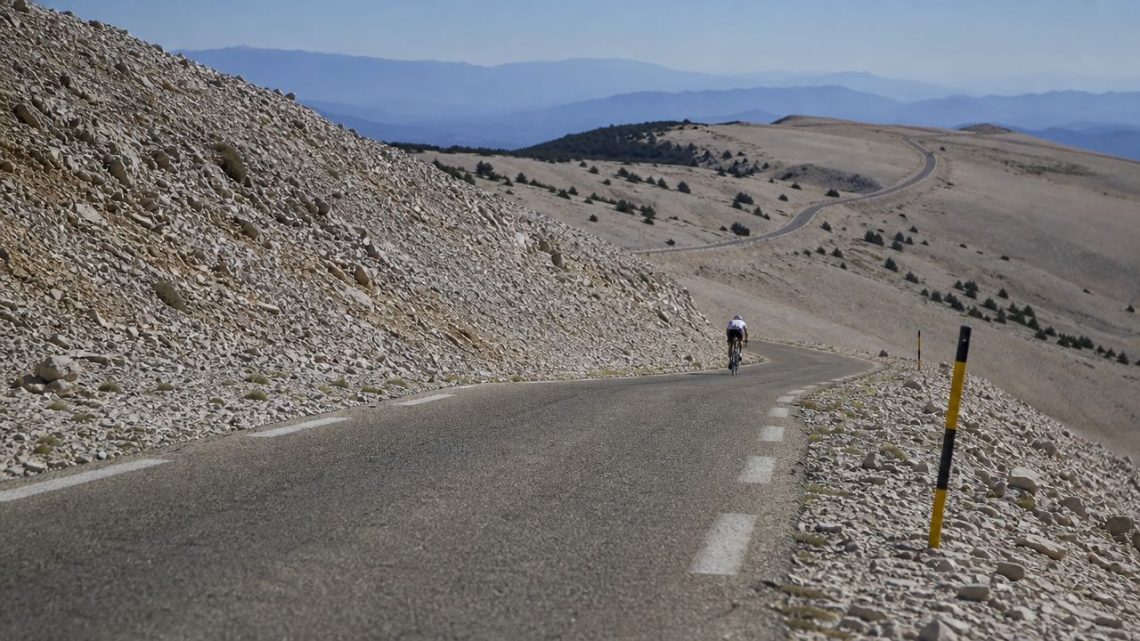
What unsettles first-time visitors is the summit. The top of Ventoux is a pale, bare moonscape of broken limestone, stripped of trees and scoured by wind. From a distance it can look snow-capped even in high summer. That bald white dome is the result of centuries of deforestation, and it turns the final kilometres into an exposed, shadeless grind where the heat radiates off the rock and the famous Mistral wind can gust hard enough to shove a rider across the road.
The climb from Bédoin, the side the professionals usually tackle, runs for roughly 21 kilometres and gains well over 1,600 metres. The cruel part is the middle: once the road enters the forest, the gradient settles into a relentless stretch that rarely eases, with long sections around ten percent and no flat to recover on. By the time a rider escapes the trees, the legs are already gone, and the worst of the wind and heat is still to come.
Why It Punishes Everyone
Ventoux has a reputation for breaking even the strongest professionals because it offers nowhere to hide. On many mountain passes a tired rider can sit on a wheel, freewheel a switchback, or shelter from the weather. Here the combination of constant gradient, thin shade, baking rock and unpredictable wind removes those small mercies. Endurance athletes who train on it talk less about speed and more about survival: pacing the effort, managing core temperature, and accepting that the mountain sets the terms.
The mountain also carries a sombre history. It was on these upper slopes, in brutal heat, that British rider Tom Simpson collapsed and died during a Tour de France stage in the 1960s, a tragedy that still shadows the climb and is marked by a memorial near the summit. Generations of riders since have treated reaching the top of Ventoux as a rite of passage rather than a routine day’s work.
The Pull of the Giant
For all its danger, or perhaps because of it, Ventoux draws amateur cyclists from around the world. Clubs organise pilgrimages to ride all three approaches in a single day. The appeal is the same one that runs through so many strange and extreme corners of sport: the chance to test yourself against something that does not care whether you make it. The riders who do reach that wind-blasted white summit rarely forget it, and most of them, sooner or later, come back to do it again.