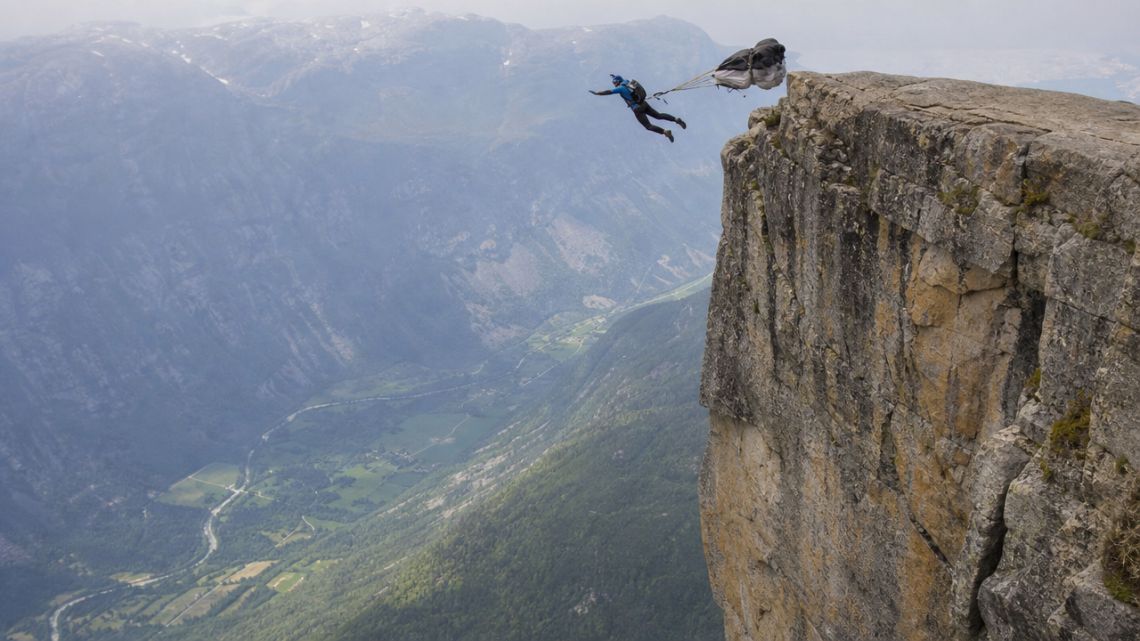
Base Jumping Off a Sheer Cliff: The Ultimate Adrenaline Rush
March 25, 2017There are extreme sports, and then there is BASE jumping, which sits in a category so far out on the edge that even seasoned skydivers tend to speak of it with a mixture of admiration and concern. To leap off a sheer cliff with nothing but a packed canopy and a few seconds of falling is to compress the entire experience of human flight into the smallest, most unforgiving window imaginable. For those drawn to it, that compression is the entire appeal.
The name itself is an acronym. B.A.S.E. stands for the four types of fixed object a jumper can launch from: buildings, antennas, spans, which generally means bridges, and earth, the natural cliffs, ridges, and escarpments that give the sport its most spectacular settings. A jumper who has leapt from all four categories earns a numbered designation, a small badge of honor in a famously tight-knit community.
Why It Is Far Riskier Than Skydiving
The crucial difference between BASE jumping and skydiving comes down to altitude, and therefore time. A skydiver exits an aircraft thousands of feet up, with long seconds to stabilize, deploy a main parachute, and, if something goes wrong, cut it away and pull a reserve. That reserve is the whole safety philosophy of the sport, a built-in second chance.
A cliff jumper has no such luxury. The launch point is low, sometimes only a few hundred feet above the ground, and the fall is over almost as soon as it begins. There is rarely enough height to deploy a reserve, which means the first parachute simply has to work. A twisted line, a canopy that opens facing the wall, or a moment of hesitation can erase the margin entirely. The sport demands that everything go right the first time, every time.
Gear, Skill, and Mindset
The equipment is purpose-built for these brutal conditions. Canopies are designed to open fast and fly predictably, packed with painstaking care because the opening is the most dangerous instant of the jump. Many cliff jumps also involve a wingsuit, the webbed garment that lets a jumper glide forward and away from the rock face, turning a plunge into something closer to controlled flight before the canopy comes out.
The mindset matters as much as the gear. Successful jumpers are not reckless thrill-seekers but obsessive planners who study the launch, the winds, the landing zone, and the hazards below long before they ever step to the edge. The qualities that keep them alive tend to include:
- Meticulous, repeated checks of equipment and conditions.
- The discipline to walk away from a jump that does not feel right.
- Deep experience in skydiving before ever attempting a fixed object.
It would be dishonest to dress any of this up as safe. BASE jumping carries one of the highest fatality rates of any recreational activity, and the sport has lost many of its most skilled practitioners. The adrenaline is real, and so is the danger, the two bound together inseparably. For the small number who pursue it, the few seconds of falling are worth everything, but they come at a price that demands clear eyes and enormous respect.